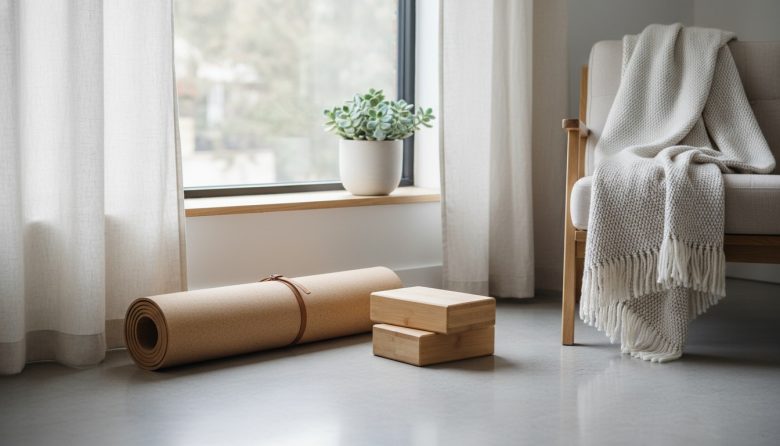
Picture this: mornings start with a frantic rush, coffee spilling as you dodge laundry piles, no time for that yoga session you keep promising yourself. Now imagine unrolling a mat in a quiet corner, sunlight filtering in, and easing into five deep breaths before the day pulls you away. That shift happens when you create a dedicated home yoga spot—it’s your cue for calm, boosting consistency without extra effort.
These spots cut friction, turning “maybe later” into “right now.” Research shows visual cues like a rolled mat increase habit adherence by 30%. In just 10 minutes, you can claim a nook that supports steady practice, stacking small wins for better focus and energy.
Beginners often skip this step, practicing on the fly amid distractions. But a fixed spot signals your brain: time to reset. Ready to find yours? We’ll scout options, stock essentials, and build cues using a simple framework.
Spot Your Home’s Hidden Yoga Haven in Under 5 Minutes
Walk through your home with this 4-question scan routine. It takes under 5 minutes and reveals the best spot without overwhelm. Start with one room if you’re new to this.
- Light check: Does morning light hit here? Note windows for natural energy (2 min).
- Space measure: Clear 4×6 feet? Use your arms to gauge—push furniture aside temporarily (1 min).
- Quiet factor: Low traffic? Test by sitting for 30 seconds; avoid high-distraction zones (1 min).
- Access ease: Near your routine path, like bedroom door? Proximity builds cues (1 min).
Example: My client Sarah scanned her bedroom corner—perfect light, 5×7 feet free after shifting a nightstand. Beginner mod: Use phone flashlight to “test” light if it’s dark. Jot notes on your phone for quick review.
This scan sets a strong foundation. Next, compare spots to match your lifestyle seamlessly.
Compare Home Yoga Spot Options for Your Lifestyle
Pick the right spot by matching your daily flow—use this comparison table to decide in under 2 minutes. It weighs key factors like space and setup against your routine.
| Location | Space Needed | Pros | Cons | Setup Time |
|---|---|---|---|---|
| Bedroom Corner | 4×6 ft | Private, morning light easy; stacks with wake-up routine | Clutter from clothes; less airy | 3 min |
| Living Room Nook | 5×7 ft | Spacious for flows; family-shared visibility cues others | TV distractions; foot traffic | 5 min |
| Kitchen Edge | 3×5 ft | Quick access post-coffee; energizing start | Smells, counters in way; small scale | 2 min |
| Balcony Spot | 4×8 ft | Fresh air boost; nature views for calm | Weather dependent; bugs/privacy | 4 min |
| Closet Retreat | 3×4 ft | Ultra-private; soundproof quiet | Tight for poses; dim light | 1 min |
Quick decision routine: Score your top two (1-5 per pro/con). Habit stack the winner with an existing cue, like placing it by your coffee maker. For more on layering movement, see How to Walk More Steps Without Extra Effort.
This match keeps things sustainable. Now, let’s stock it simply.
Stock Your Spot with 5 Friction-Free Essentials
Grab these under-$20 picks for a 2-minute unroll routine. They minimize setup friction, inviting daily use. Weekly gear check tracker: Sunday 1-min scan—replace worn items.
- Yoga mat (rolled, non-slip): $15 thin foldable; cue: Leave half-unrolled overnight for visual pull.
- Strap or towel: Free household item; 30-sec wrap for binds. Mod: Tie loose for beginners.
- Block or book stack: $10 foam or two thick books; props for tweaks. Routine: Place at mat edge.
- Timer cushion: Phone stand ($5) or pillow; 1-min breath timer setup.
- Plant or candle: $10 low-light plant; scent cue for unwind. Progress: Note mood lift weekly.
Beginner mod: Start with mat + timer only. These build small wins, like easier forward folds.
Essentials ready? Cues make it automatic next.
Build Cues That Pull You into Yoga Automatically
Layer cues to trigger practice effortlessly. Example: Unroll mat post-alarm, stack with brushing teeth. Environment tweak: Dimmer switch near spot for evening flows.
Phone timer routine: Set 3-min session (child’s pose + breaths). Visual cue: Mat edge under door—trips your brain to pause. For recharge ideas, check Simple Daily Routine to Recharge After Work.
7-day trial: Pick one cue, track sessions in notes app. Steady pulls create consistency without force. This flows into blocking obstacles.
Bust Common Blockers with These Practical Tweaks
- Clutter creep: Bin nearby for stray items; 1-min morning clear routine keeps mat ready.
- Time crunch: 3-min sun salutation flow; mod: Seated version. Stack with coffee wait.
- Family interruptions: Earplugs or sign (“Yoga time”); 30-sec boundary set cue. Progress: Note fewer pauses weekly.
- Motivation dip: Mirror affirmation sticky note; pair with tiny metric preview below. 2-min reset if skipped.
These fixes sustain your nook. Now, tie it all into a framework.
Your 4-Pillar Framework for a Lasting Yoga Nook
- Scout & Secure (Week 1): Run 5-min scan daily till spot chosen. Routine: Tape outline on floor. Mod: One room only.
- Gear & Cues (Week 2): Stock 3 essentials first; add mat cue. 2-min setup test-run nightly.
- Test & Tweak (Ongoing): 7-min session 5x/week; note what works. Adjust: Swap spot if needed.
- Track Tiny Metric: Log 1 yoga breath session per day—mark in app. Builds momentum steadily.
Tiny metric: “Log 1 yoga breath session per day—mark in app. Steady wins build momentum.” CTA: Pick pillar 1 + morning cue. Try for 7 days.
For walking habit ties, explore How to Build a Simple Daily Walking Habit to layer movement.
This framework scales with you. Questions? See below.
FAQ
What’s the smallest space for a home yoga spot?
A 4×6 ft corner works perfectly for most—think wall against one side. Beginner mod: Focus on wall poses like mountain or tree to save room. Add a mirror for form checks without extra space.
How do I keep my yoga spot clutter-free?
Use a 2-min evening reset routine: Sweep items into a nearby bin or basket. Install wall hooks for straps and mats—under $10. Consistency here prevents friction buildup over weeks.
Can I set up yoga in a shared living room?
Yes, with a foldable mat and visual cue like a room divider screen or plant boundary. Time sessions during quiet hours; communicate with housemates for respect. This builds family buy-in over time.
What if I travel a lot—still worth it?
Absolutely: Create a portable mini-spot kit in a tote—mat, strap, timer under 5 lbs. Maintain habit cue by unrolling in hotel corners; consistency carries over. Home nook anchors the routine upon return.
How soon will I see consistency benefits?
Small wins emerge in 7 days via tiny metric tracking—like easier breaths and calmer starts. By week 4, cues automate 80% of sessions. Sustainable tracking shows steady progress without pressure.