Ever notice how your body protests after a long day at the desk? That familiar tightness in your shoulders or the ache in your lower back from endless sitting—it sneaks up on us all. Gentle yoga steps in as your friendly ally, easing tension and unlocking flexibility with moves that fit right into your everyday rhythm.
I’m Sophia, and I’ve seen how small, consistent stretches transform stiff mornings into fluid ones. No need for fancy studios or hours-long sessions; these practices build mobility steadily, improving posture and joint ease without strain. Picture starting your day with a simple post-coffee cue: a few gentle rolls to wake your body kindly.
Gentle yoga shines for busy home cooks like us because it stacks onto routines we already love, like brewing tea or prepping meals. You’ll notice reduced daily discomfort and a newfound lightness in movement. Stick with me for a simple framework, quick sequences, and tweaks to make it sustainable.
Why Gentle Yoga Fits Seamlessly into Your Daily Routine
Gentle yoga differs from intense styles by prioritizing ease over effort, focusing on slow breaths and soft holds. It targets flexibility in joints and muscles, countering the posture slump from screen time or kitchen stands. Over time, this leads to better mobility for chores like reaching high shelves or playing with kids.
Habit stacking makes it frictionless—pair a seated twist with your morning tea ritual. This cue turns yoga into a natural pause, building consistency without new time blocks. Many find their hips loosen after just evenings linked to winding down.
For lasting wins, consider how to plan light dinners for easy digestion, as nourished bodies respond better to stretches. Environment tweaks, like rolling out a towel near your favorite chair, reduce setup friction. These small cues foster steady progress in flexibility.
Your 5-Minute Morning Warm-Up to Ease into Movement
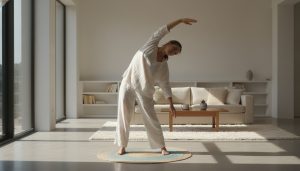
Begin with this quick sequence to greet your body softly, priming it for the day. Stand or sit comfortably, then start with breath awareness: inhale for four counts, exhale for six. This sets a calm rhythm for all poses.
Follow these steps in order, moving slowly:
- Neck rolls: Gently drop your chin to chest, roll ear to shoulder on each side, five breaths per direction. Eases desk-induced knots.
- Shoulder shrugs: Lift shoulders to ears on inhale, release on exhale, repeat eight times. Releases upper back tension built from carrying bags or stirring pots.
- Cat-cow flow: On hands and knees, arch back on inhale (cow), round on exhale (cat), six rounds. Warms spine for fluid twists later.
Modifications keep it beginner-friendly: use a chair for cat-cow if knees protest, or wall support for neck rolls. End by noticing your breath—deeper already? This warm-up cues your body for more movement throughout the day.
Unlock Tight Hips and Hamstrings with These 4 Beginner Poses
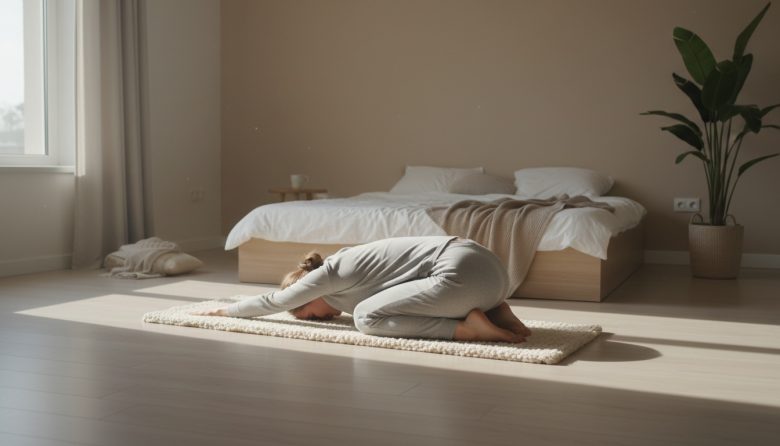
Tight hips from driving or standing at counters? Child’s pose invites gentle release. Kneel, fold forward with arms extended or by sides, forehead to floor or pillow. Breathe into your back for 10 breaths, feeling hips soften.
Seated forward fold targets hamstrings without force. Sit with legs extended, hinge at hips toward toes, hands on shins or floor. Bend knees if needed; hold five breaths, then switch to one leg at a time for ease.
Low lunge opens hip flexors—step one foot forward, knee over ankle, back knee down. Sink hips gently, arms overhead or on thigh. Use a blanket under the knee; five breaths per side builds steady openness.
Finish with supine twist for spine relief. Lie back, hug one knee across body, gaze opposite. Pillow under knee supports beginners; hold five breaths each side. These poses, done daily, create small wins in reach and comfort.
Safety first: warm up first, never bounce into stretches. Props like cushions mimic yoga blocks from kitchen items. Progress feels sustainable when you honor your body’s cues.
Gentle Yoga Do’s and Don’ts for Safe Flexibility
| Do This | Don’t Do This | Why It Matters |
|---|---|---|
| Breathe deeply into poses | Hold breath while stretching | Promotes relaxation and prevents strain |
| Use props like blankets | Force body into deep bends | Supports alignment for steady progress |
| Move slowly with awareness | Rush transitions | Builds body cues for sustainable habits |
| Listen to body signals | Ignore discomfort | Avoids injury for long-term consistency |
This table guides safe practice, turning potential pitfalls into smooth routines. Refer back as you build habits. It reinforces the gentle approach for enduring flexibility gains.
The 4 Pillars Framework for Sustainable Yoga Habits
Build flexibility through this simple structure, designed for real life.
- Short daily sessions: Commit to 5-10 minutes, like your warm-up. Consistency trumps length for muscle memory.
- Environmental cues: Place a mat or towel by your door or bed. Visual reminders cut friction, sparking automatic starts.
- Gentle progression: Add one pose weekly, such as low lunge after mastering child’s pose. Small layers ensure steady adaptation without overwhelm.
- Reflection ritual: Note one ease felt post-practice, like looser shoulders. This tracks small wins, fueling motivation.
Before: Chaotic mornings skipped movement. After: Habit stacking with coffee led to fluid days. Pair with how to set up a cozy home workout spot for even less friction.
This framework turns yoga into a reliable routine. Transitions naturally reduce tension over weeks.
Tackle Common Blockers with Friction-Free Fixes
Time crunch hits everyone—stack yoga onto brushing teeth for a seated fold. No extra minutes needed.
Soreness after new poses? Apply a warm towel first, then shorten holds. Rest days build recovery cues.
Motivation dips? Use phone reminders tied to meals, and celebrate with a favorite tea post-session. Keeps it light.
Forgetfulness: Environment tweak like mat by coffee maker. Links practice to loved routines.
Stiffness persists? Check tips for staying active every single day to complement yoga. These fixes make consistency feel effortless.
Measure Small Wins: Your Tiny Metric for Flexibility
Track your weekly forward fold reach: measure fingertips to floor in seated fold. Note in a phone app—simple and revealing.
Before: Fingers inches from floor, frustration builds. After two weeks: Closer touch, proof of progress. This tiny metric spotlights sustainable gains.
Tie it to reflection pillar for momentum. Small numbers motivate without pressure.
Next Step: Choose child’s pose + post-dinner cue. Commit to 7 days and notice the ease.
FAQ: Your Gentle Yoga Questions Answered
Can I start yoga if I’m super stiff?
Absolutely—gentle yoga is perfect for stiffness, starting with supported poses like child’s with pillows. It builds flexibility gradually, honoring tight spots without force. Many report looser joints in days through breath-focused holds.
How often should beginners practice?
Aim for 3-5 short sessions weekly, with rest days for recovery. Consistency in brief practices yields better results than sporadic long ones. Adjust based on energy, stacking onto daily cues.
What if yoga causes soreness?
Mild soreness signals adaptation; ease it with warm-ups and fewer reps next time. Incorporate rest or walks, and use props for support. It fades as your body builds sustainable strength.
Do I need a yoga mat or special clothes?
Not at all—use a rug, towel, or carpet, and wear comfy layers like pajamas. Focus on cues over gear reduces friction. Home setups keep it accessible for routines.
How long until I see flexibility improvements?
Notice small wins like easier reaches in 1-2 weeks with steady practice. Deeper changes unfold over months via consistent pillars. Track your tiny metric to celebrate progress.