Why Most Budget Eating Advice Falls Short
If you have ever searched for how to eat healthy on a budget, you have likely seen the same tips on repeat: meal plan, buy frozen vegetables, cook dry beans, and skip the snack aisle. All of that works, but it misses the core question: which foods give you the most nutrition for every dollar, and how do you actually use them without throwing half away?
I have spent years teaching nutrition on a shoestring, and I have made every mistake in the book. I once bought a 5-pound bag of carrots because it was a steal, then watched half of them go slimy in the fridge. That is not saving money. That is paying for compost. The real skill is not just buying cheap - it is buying foods that pack a nutritional punch per dollar, and then using every last bit of them.
This article gives you a framework I use with clients and in my own kitchen. You will learn how to rank foods by nutrient density per dollar, how to build a waste-not meal matrix that turns one base ingredient into three different meals, and how to handle budget eating when you have no time, no kitchen, or a very specific cultural palate. No generic lists. Just practical, tested methods.
The Nutrient-Density per $1 Framework
The standard advice says to buy beans and rice. But not all beans are equal, and not all rice is worth your money. The nutrient-density per $1 framework weighs two things: how many essential nutrients a food delivers per serving, and what that serving costs at a typical grocery store.
You can calculate this roughly by dividing the percent daily value of key nutrients (protein, fiber, iron, calcium, vitamin C, vitamin A, folate) by the cost per serving. I use the USDA FoodData Central for nutrient values and my local store prices for costs. The result is a ranking that surprises most people.
| Food | Cost per serving (approx.) | Key nutrients per serving | Nutrient-density score (out of 10) |
|---|---|---|---|
| Eggs | $0.20 | Protein, B12, choline, vitamin D | 9.5 |
| Cabbage | $0.15 | Vitamin C, vitamin K, fiber | 9.0 |
| Lentils (dry) | $0.18 | Protein, fiber, iron, folate | 9.0 |
| Frozen spinach | $0.25 | Vitamin A, vitamin K, iron, folate | 8.5 |
| Canned sardines | $0.50 | Omega-3, protein, calcium, vitamin D | 8.5 |
| Oats (bulk) | $0.10 | Fiber, magnesium, thiamin | 8.0 |
| Sunflower seeds | $0.20 | Vitamin E, magnesium, selenium | 7.5 |
| Sweet potatoes | $0.30 | Vitamin A, fiber, potassium | 7.5 |
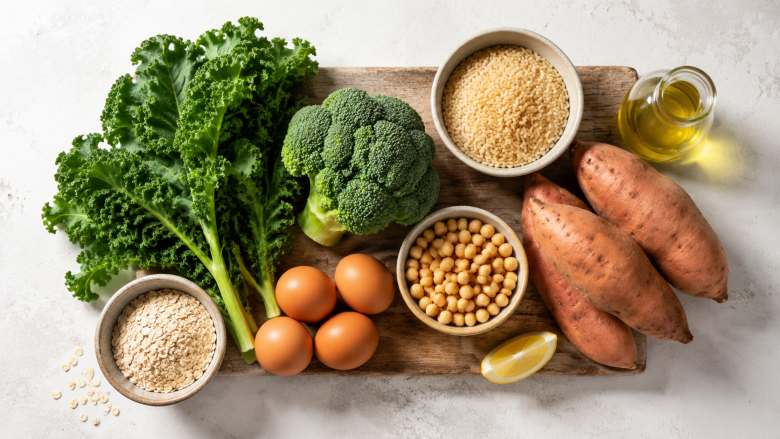
These are rough numbers based on my local Midwest grocery prices in early 2025. Your costs will differ, but the ranking holds. Eggs, cabbage, lentils, and frozen spinach are consistently among the highest nutrient density per dollar in every region I have checked. The key is to use them in ways that minimize waste and maximize variety.
One thing nobody tells you about this framework: it changes with the season. In summer, fresh tomatoes and zucchini might outrank cabbage. In winter, citrus and root vegetables shine. The skill is learning to re-rank your list every few weeks. I keep a small notebook with prices and nutrient notes. It sounds nerdy, but it has saved me hundreds of dollars.
How to Calculate Your Own Nutrient-Density Score
You do not need a spreadsheet to benefit from this. Pick five foods you buy regularly. For each, note the cost per serving (divide package price by number of servings) and list the top five nutrients it provides. Give a point for each nutrient that provides at least 10% of your daily need per serving. Then divide total points by cost. That gives you a rough score.
For example, a serving of cabbage costs 15 cents and gives you over 50% vitamin C, 60% vitamin K, and 10% fiber. That is three points divided by 0.15 = 20. A serving of a protein bar costs $1.50 and gives you maybe 10% protein, 5% iron, and 10% fiber - two points divided by 1.50 = 1.3. The difference is stark.
This is not about eliminating all convenience foods. It is about knowing where your money buys the most nutrition, so you can splurge on a treat without guilt. For more on balancing indulgences, see our guide on choosing healthy snacks on the go.
The Waste-Not Meal Matrix: One Base, Three Meals
Buying cheap only helps if you eat what you buy. The average American household throws away about 30-40% of the food they purchase, according to the EPA. That is money down the drain. The waste-not meal matrix is a simple system I use to plan around one base ingredient and repurpose it across three meals.
Here is how it works. Pick a cheap, high-nutrient base - lentils, cabbage, eggs, or frozen spinach. Cook a large batch of that base. Then split it into three containers. Each container becomes a different meal with minimal extra ingredients.
Let me give you a concrete example from my own kitchen. I cooked two cups of dry lentils (about $0.50 total). I made three meals:
- Meal 1: Lentil soup. Half the lentils, plus a can of diced tomatoes, an onion, and vegetable broth.
- Meal 2: Lentil salad. One-third of the lentils, tossed with cabbage slaw, a simple vinaigrette, and sunflower seeds.
- Meal 3: Lentil curry. The rest, with frozen spinach, curry powder, and coconut milk (or a splash of milk and a spoon of peanut butter as a substitute).
Total cost for all three dinners: about $4.50, including the extra ingredients. That is $1.50 per meal, and each one has a different flavor profile so you do not get bored.
The same works for cabbage. Shred a head of cabbage (about $1.50). Use one-third raw in slaw, one-third sautéed with eggs for a breakfast scramble, and one-third stir-fried with a protein and rice. You get three meals from one vegetable.
When I first tried this, I made the mistake of cooking too much at once and storing it in a single container. By the third day, it tasted like leftovers. Now I portion the base into separate containers immediately after cooking, and I add different sauces and spices only when I reheat. That small change makes a huge difference in how fresh the meals taste.
Another thing nobody tells you: the waste-not approach works best when you build your meal plan around the base, not around individual recipes. Most people plan meals first, then buy ingredients. Flip it. Buy the cheapest high-nutrient base you can find, then design three meals around it. That is the core of the matrix.
Batch Cooking for One
If you live alone, batch cooking can feel wasteful and monotonous. The solution is to freeze portions. Lentils, soups, and curries freeze beautifully. I freeze single servings in silicone muffin cups, then pop them into a freezer bag. That way I have a ready-made dinner for days when I do not feel like cooking.
For eggs, you cannot freeze them whole, but you can hard-boil a dozen at once and use them for breakfast, salads, and snacks throughout the week. Hard-boiled eggs last up to a week in the fridge, and they are a perfect portable protein.
If you have no freezer or kitchen, focus on no-cook bases like cabbage, canned beans, and Greek yogurt. You can still build a matrix: canned beans become a bean salad, a bean wrap, and a bean dip. Cabbage becomes slaw, wraps, and a crunchy topping for any grain bowl.
No-Cook and Low-Cook Strategies for Time-Poor People
Not everyone has the time or energy to cook a big batch. Maybe you are a student in a dorm with only a microwave, or a shift worker who gets home at 10 p.m. You can still eat healthy on a budget without a stove.
The key is to buy foods that are already cooked or require no cooking: canned beans, canned fish, pre-washed greens, raw vegetables like carrots and bell peppers, Greek yogurt, cottage cheese, whole-grain bread, and nut butters. These are not as cheap as dry beans, but they are still far cheaper than takeout.
My favorite no-cook meal is a "power bowl" made with a can of rinsed black beans, a handful of baby spinach, half an avocado (if on sale), and a squeeze of lime. It takes 5 minutes and costs about $2.50. I also make a sardine salad - canned sardines, chopped cabbage, and a simple vinaigrette. That is a complete meal with omega-3s and vitamin D for about $1.75.
For microwave-only cooking, you can still cook frozen vegetables and even brown rice. I use a microwave rice cooker that costs $10. I cook a batch of rice and a bag of frozen mixed vegetables at the start of the week. Then I have a base for multiple meals: rice bowls with eggs, rice with sardines and soy sauce, or rice with peanut butter and sriracha for a quick satay-style dish.
One misconception is that no-cook eating means processed food. Not true. Canned fish and beans are minimally processed and retain most nutrients. Just watch the sodium - rinse canned beans and choose low-sodium versions when possible.
If you are someone who relies on snacks, check out our article on organizing your pantry for healthy snacks - it pairs perfectly with a no-cook approach.
Cultural Staples and Regional Affordability
The "eat healthy on a budget" advice often ignores cultural preferences. If you grew up eating rice and beans, that is already a budget-friendly staple. But if your family tradition includes plantains, yucca, or injera, you can still find affordable nutrient-dense options at your local international market.
Ethnic grocery stores often have better prices on spices, legumes, and produce than mainstream supermarkets. I have seen cilantro cost half as much, and bags of dried beans are often significantly cheaper. Do not overlook these stores. They are also where you will find ingredients like millet, teff, or amaranth, which are nutrient powerhouses and usually very cheap.
Regional differences matter too. In the Pacific Northwest, salmon might be affordable if you buy it frozen on sale. In the Southwest, you can get great deals on avocados and peppers. The nutrient-density per $1 framework is not a fixed list - it is a method you apply to your local market. I encourage you to do a "price scout" at two or three stores near you and note the cost per serving of your top ten foods.
I once had a client who thought she could not eat healthy because she only had $30 a week and a tiny kitchen. We found that a local Mexican grocery sold a 10-pound bag of pinto beans for $6, and a nearby Asian market had a huge bag of brown rice for $8. She made a batch of beans and rice, then used cabbage and frozen spinach from a discount store. She ate well for a month on that initial investment.
The lesson is: do not assume the cheapest store is the one with the most coupons. Sometimes the local ethnic market has the real deals. And if you live in a food desert, consider online grocery delivery with a membership - it can be cheaper than buying at a corner store, and you can plan around sales.
Common Pitfalls and How to Avoid Them
Even with a solid framework, you will hit snags. Here are the mistakes I see most often, and what I have learned the hard way.
Buying in Bulk Without a Plan
Warehouse clubs are tempting, but a 10-pound bag of onions is only a deal if you can use them before they sprout. I once bought a huge bag of sweet potatoes and threw away half. Now I only buy bulk items that have a long shelf life or that I freeze in portions. Frozen vegetables are great for bulk buying; fresh produce is not, unless you have a plan to preserve it.
Ignoring the Unit Price
Stores often put the sale price in large letters, but the unit price (per ounce or per pound) is what matters. I have seen "buy one get one" deals that were still more expensive per ounce than the store brand. Always check the shelf label.
Overcomplicating Meal Prep
Meal prep does not mean spending six hours on Sunday cooking five different recipes. My most successful weeks are when I cook one batch of a base (like lentils or roasted vegetables) and then assemble quick meals. The waste-not matrix is designed to be simple. If you find yourself dreading the prep, you are doing too much.
Forgetting About Frozen
Frozen fruits and vegetables are often more nutritious than fresh ones that have sat in the fridge for a week. They are also cheaper, especially for out-of-season produce. Frozen spinach, broccoli, and berries are staples in my kitchen. They never go bad, and they are easy to add to smoothies, soups, and stir-fries.
Not Checking the Clearance Rack
The clearance rack is a goldmine. I have found marked-down chicken, fish, and bread that I freeze immediately. Just make sure you check the use-by date and freeze within a day. This requires flexibility - you have to build your meals around what is on clearance, not the other way around.
Most people do not realize that the "sell by" date is not a safety date. It is about quality. If you freeze meat on the sell-by date, it stays safe for months. This is a huge money saver.
Putting It All Together: A Week on a Budget
Here is a realistic week using the nutrient-density per $1 framework and the waste-not matrix. I am assuming a single person with a stove and a freezer, shopping at a discount grocery store with a small budget of $35 for the week.
Sunday: Cook a large pot of lentils (1 cup dry) and a batch of brown rice (1 cup dry). Hard-boil 6 eggs. Shred half a head of cabbage. This takes about 45 minutes.
Monday: Lentil curry with frozen spinach and rice. (Use 1 cup of cooked lentils.)
Tuesday: Cabbage and egg scramble with a slice of whole-grain toast. (Use 1 cup of shredded cabbage and 2 eggs.)
Wednesday: Lentil salad with cabbage, sunflower seeds, and a simple vinaigrette. (Use 1 cup of lentils and 1 cup of cabbage.)
Thursday: Rice bowl with sardines, a handful of frozen peas (steamed), and soy sauce. (Use 1 cup of rice and 1 can of sardines.)
Friday: Lentil soup with vegetable broth and canned tomatoes. (Use the remaining lentils.)
Saturday: Fried rice with leftover rice, frozen mixed vegetables, and an egg. (Use the last egg and any leftover cabbage.)
Your shopping list: 1 cup dry lentils, 1 cup dry rice, 6 eggs, half a cabbage, 1 bag frozen spinach, 1 bag frozen mixed vegetables, canned tomatoes, canned sardines, sunflower seeds, vegetable broth, and basic spices. Total cost: about $20-25. You will have extra cabbage and rice for the next week, and you have eaten a variety of meals without spending much.
This is not a rigid meal plan. It is a template. Swap the lentils for black beans, the cabbage for carrots, the sardines for canned tuna. The point is to use the framework, not follow a script.
If you are just starting out, I recommend reading our beginner guide to everyday healthy eating before you go shopping. It covers the basics of portion sizes and balanced plates, which will help you apply the nutrient-density scores effectively.
Final Thoughts
Eating healthy on a budget is not about deprivation or complicated meal prep. It is about making smart choices based on nutrient density per dollar, and using every bit of what you buy. The waste-not meal matrix turns a single base into three different dinners, saving you time and money. And by adapting the framework to your local stores and cultural staples, you can make it work for years - not just for one week.
Start small. Pick one high-nutrient food from the ranking, cook a batch, and use it in three meals. Track your spending for two weeks. You will likely find that you are eating better and spending less than you did before. That is the real secret: not a magic diet, but a repeatable system.
And remember, there is no single right way. What matters is that you are nourishing yourself without breaking the bank. If you stumble, adjust. I still have weeks where I buy a vegetable that goes bad before I use it. The difference now is that I know it is a small blip, not a failure. You have the tools now. Go use them.