Why Most Healthy Eating Advice Fails You
You already know to eat more vegetables, drink water instead of soda, and cook at home. The problem is not information. It is execution. In my years as a nutrition coach, I have seen dozens of clients who could recite every healthy eating tip on the internet yet still reach for chips at 3 p.m. The reason is simple: they are trying to change their eating with willpower alone, and willpower is a finite resource that runs out by evening.
The solution is not another list of foods to eat or avoid. It is to redesign your environment and build micro-habits so that healthy eating becomes the default, automatic choice. This article shows you exactly how to do that, with a concrete framework called the 3-3-3 rule and practical kitchen design strategies that I have used with hundreds of real people. You will leave with actionable steps, not just theory.
The 3-3-3 Rule: Your Daily Eating Skeleton
The 3-3-3 rule is a simple structure that prevents the two biggest causes of unhealthy eating: extreme hunger and grazing without awareness. It stands for three meals, three snacks, and three hours apart. You eat a main meal every three hours, with a snack in between, so you never go more than four waking hours without fuel.
When I first tried this, I made the mistake of interpreting it too rigidly. I set alarms on my phone and forced myself to eat a snack exactly three hours after breakfast, even if I was not hungry. That led to overeating and frustration. The rule is not a prison schedule; it is a guideline to keep blood sugar stable. The real key is that you never allow yourself to become ravenous, because ravenous hunger overrides all good intentions.
Why the 3-3-3 Rule Works (The Science Behind It)
When you go too long without eating, your body releases ghrelin, the hunger hormone, and your blood sugar drops. Research from the National Institute of Diabetes and Digestive and Kidney Diseases shows that erratic eating patterns are linked to higher insulin resistance and weight gain. The 3-3-3 rule gives you a predictable rhythm that supports stable glucose levels and reduces impulsive snacking.
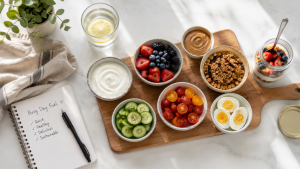
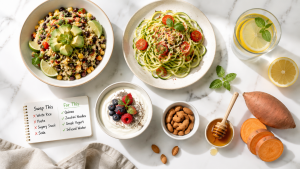
But the rule is not just about timing. It also forces you to be deliberate about what counts as a meal and a snack. A meal should have protein, fiber, and a healthy fat. A snack should have at least two of those. This is where most people slip: they snack on a banana alone (just sugar) or a handful of pretzels (just carbs). I tell my clients to pair an apple with a tablespoon of peanut butter, or a few crackers with cheese. That combination keeps you full for two hours, not twenty minutes.
Common Mistakes with the 3-3-3 Rule
- Ignoring portion sizes. The rule does not give you permission to eat anything. A "meal" should be roughly the size of your fist for protein, half a plate of vegetables, and a cupped hand of carbs.
- Treating snacks as junk food. A candy bar is not a snack under this rule. It is a treat that spikes your blood sugar.
- Assuming it fits every lifestyle. Shift workers, people with medical conditions like diabetes, or those on intermittent fasting may need a modified schedule. The 3-3-3 rule is a starting point, not a law.
The beauty of this rule is that it reduces decision fatigue. You no longer wonder when you should eat next; you just follow the rhythm. Over time, your body adapts and you start feeling hunger at the right times, which is a sign your metabolism is becoming more regular.
Environment Design: Your Kitchen Is a Decision Machine
I have a client named Sarah who was brilliant at meal planning but always failed by 8 p.m. She would swear she would not snack after dinner, yet she found herself standing in the pantry with a bag of tortilla chips. The problem was not her determination. It was that the chips were on the middle shelf, at eye level, right next to the healthy nuts she wanted to eat. In her field of vision, the unhealthy option was the most salient.
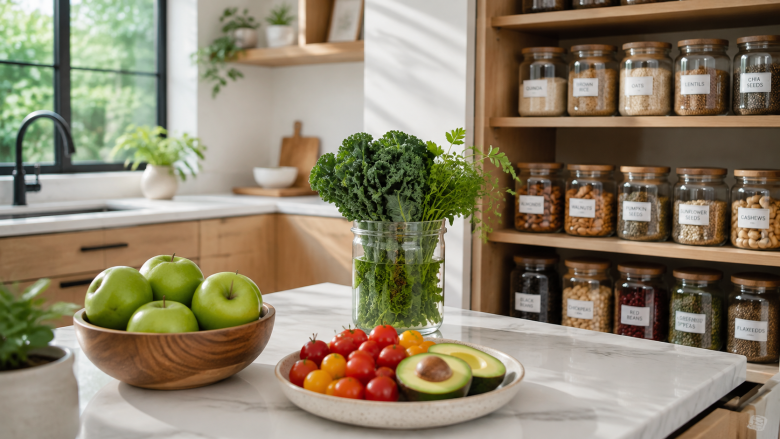
The most powerful change she made was moving the chips to a high cabinet behind the blender, and putting a bowl of pre-washed grapes and a jar of almonds on the counter. Within a week, her evening snacking dropped by 80%. That is environment design: you change the default choice from unhealthy to healthy by making healthy options visible and convenient, and unhealthy options hidden or inconvenient.
The 4-Point Kitchen Makeover
Here is a straightforward process to redesign your kitchen in one weekend. It does not require a full pantry overhaul to be effective.
- Visibility: Keep fruit in a clear bowl on the counter, not in the fridge drawer. Keep a vegetable tray with cut carrots, cucumbers, and bell peppers at eye level in the fridge, not behind the yogurt. The easier it is to grab, the more likely you will eat it.
- Hide the junk: Put cookies, chips, and sweets in opaque containers on the top shelf of a high cabinet or in the back of a lower cabinet. Out of sight is out of mind for most people. If you live with others who insist on having snacks, designate one cabinet that is solely theirs, and make a personal rule that you never open it.
- Prep for friction: Cut vegetables in advance and store them in water in glass jars. Portion nuts into small baggies or containers. Hard-boil six eggs at the start of the week. The extra ten minutes of prep saves you from the decision to order takeout when you are tired and hungry.
- Make the unhealthy path harder: Do you have a soda habit? Remove all sweetened drinks from the house. If you want a treat, you have to leave the house to get it. That friction is enough to make you rethink. Similarly, keep the microwave at the back of the counter and the toaster oven in a cabinet. It sounds silly, but it works.
Most people do not realize that the number of decisions you make in the kitchen directly determines your willpower. When you walk into a cluttered kitchen with dozens of options, you become overwhelmed and default to whatever is easiest. By narrowing your options to a few healthy defaults, you conserve your mental energy for other tasks.
Why "Everything in Moderation" Often Backfires
Nutritionists love to say "everything in moderation," and it is true for some people. But for others, especially those with a history of dieting or binge eating, keeping trigger foods in the house is a recipe for failure. I have seen clients who could not stop at two cookies, and they blamed themselves for being weak. They were not weak; they were fighting an environment that put cookies in their line of sight. Research on cue-induced eating shows that just seeing a food can trigger cravings, even if you are not hungry. If you know that you are vulnerable to snacking on a specific food, the most compassionate thing you can do is remove it from your home and allow yourself to enjoy it occasionally outside, at a café or a restaurant.
This is not about deprivation. It is about being honest with yourself about your triggers. I have a client who loves potato chips, and she used to buy a bag every week and eat the whole bag in two days. She now buys a small single-serve bag once a week as a planned treat, and she savors it on a Saturday afternoon. She does not keep chips in the house otherwise. This approach works because it removes the temptation from daily life while still honoring the desire.
The Psychology of Emotional Eating: Why We Overeat
Environment design handles the external cues, but emotional eating is internal. You can have a perfectly organized kitchen and still binge on ice cream after a stressful day at work. I want to address this upfront because it is the hidden reason most diets fail.
Emotional eating is defined as eating in response to emotions, not hunger. It can be triggered by stress, boredom, sadness, or even happiness. The classic pattern is feeling overwhelmed, reaching for comfort food, and then feeling guilty afterward. The guilt leads to more emotional eating, creating a cycle. Most people do not realize that the urge to eat when you are not physically hungry is often a signal from your brain that it wants a reward, not food.
One technique that I have found remarkably effective is the 5-Minute Pause. When you feel the urge to eat something outside your planned meal, set a timer for five minutes. During those minutes, do not forbid yourself from eating; just wait. Get a glass of water, take deep breaths, or walk to another room. After five minutes, if you still want the snack, eat it - but you will be surprised how often the craving has passed. This is not about suppressing desire; it is about giving your rational brain time to catch up with your emotional brain.
A second technique is to identify your "hunger scale." From 1 (starving) to 10 (stuffed), most people only feel hunger at either 1 or 10. The goal is to start eating at 3 (moderately hungry) and stop at 7 (satisfied, not full). This prevents the rushes of extreme hunger that lead to overeating. I practice this by asking clients to rate their hunger before every snack. They soon realize that they often eat at a 4 or 5, which is not true hunger but boredom or stress. The scale gives you a concrete number to check in with.
Mindful Eating: The 20-Minute Rule
Another powerful tool is mindful eating, which is not about eating slowly for its own sake but about paying attention. When you eat in front of screens, you tend to eat 20-30% more than when you eat at a table, according to a study from the National Institutes of Health. The simple fix is to eat at least one meal a day without any screens. Set a timer for 20 minutes and try to stretch your meal to that length. Put your fork down between bites and savor the flavors. You will find that you feel full earlier and enjoy the food more.
I remember when I first tried this, I felt ridiculous stretching a sandwich into 20 minutes. But by the 15th minute, I realized I was eating because I had more food on my plate, not because I was hungry. The last three bites were purely mechanical. Now I consciously stop when I hit a 7 on the hunger scale, and I waste less food and feel lighter.
Micro-Habits: Small Changes That Stick
We have covered structure and environment. Now let us talk about the tiny habits that you can stack onto your existing routine without feeling like you are overhauling your life. These are the building blocks of a sustainable healthy eating pattern.
The Two-Minute Meal Prep Rule
You do not need to spend a Sunday afternoon batch cooking. Instead, spend two minutes each morning to prepare one healthy element for the day. That might be washing an apple, measuring out a single serving of oatmeal, or slicing a cucumber into a container. When you have that ready, the choice to eat healthy becomes easier because the work is done. I call it "prep one thing, not everything." Over time, these two-minute actions build into a repertoire of prepared foods.
Habit Stacking for Eating
Habit stacking is a technique from James Clear's book "Atomic Habits," and it works beautifully for nutrition. You link a new behavior to an existing habit. For example, after you brush your teeth in the morning, you immediately drink a glass of water. After you pour your morning coffee, you add a handful of oats to the pot for later. After you sit down for dinner, you put your phone in another room. The key is to choose a cue that is already automatic so that the new habit piggybacks on it.
Try this: every time you walk into the kitchen, ask yourself, "Am I hungry at a 3 or is this just a cue?" This question takes five seconds, but it interrupts the autopilot snacking. You can also set a goal to eat one extra vegetable at dinner, and link it to a specific place in your meal: "When I plate my dinner, I will add a portion of veggies that covers half the plate." After two weeks, this becomes automatic.
What Could Go Wrong (and How to Recover)
No habit is perfect. You will have days where you eat a whole pizza or skip breakfast. The worst thing you can do is let one slip-up spiral into a full day of guilt and overeating. I tell my clients to apply the 80/20 rule: aim to eat healthy 80% of the time, and reserve 20% for treats. This is not an excuse to binge; it is a realistic target that allows for social events, holidays, and plain old cravings.
When you slip, acknowledge it, forgive yourself, and get back on track with your next meal. The 3-3-3 rule helps here because it gives you a clear next checkpoint. Missing one snack does not ruin the day. Do not spend an hour ruminating on a mistake that took five minutes to happen. Instead, ask what triggered the slip: Was I hungry at a 1? Was I stressed? Was the food visible? Use that observation to adjust your environment for next time.
Putting It All Together: A 7-Day Action Plan
You have the tools. Here is a concrete plan to implement everything in the next week. Follow it step by step, and you will start to see automatic healthy eating happening without constant willpower.
- Day 1: Set up the 3-3-3 rule. Write down your three meals and three snacks for tomorrow. Set a phone reminder to check your hunger level before each one.
- Day 2: Do the kitchen makeover. Move fruit to the counter, hide snacks, and prep a batch of cut veggies. This takes thirty minutes.
- Day 3: Practice the 5-minute pause before any unplanned snack. Keep a small notebook or phone note to record how many times you paused and whether you still ate.
- Day 4: Implement the two-minute prep in the morning. Choose one healthy item to prepare and place it at the front of your fridge or counter.
- Day 5: Eat one meal without screens. Use a timer for 20 minutes and pay attention to your hunger as you finish.
- Day 6: Review your hunger scale scores from the last few days. Identify patterns: are you eating at a 4 or 5 often? Plan a stress-reducing activity (like a short walk) for one of those times. For a reminder of how a quick walk can reset your mind, see our simple morning walk routine.
- Day 7: Reflect on what worked and what did not. Adjust your environment and schedule for next week. The 3-3-3 rule is flexible, so tweak the spacing if you are never hungry at snack time.
This plan is not about being perfect. It is about building a system that makes healthy eating the path of least resistance. By changing your kitchen and your habits, you stop relying on motivation and start relying on structure.
Sustaining Change Without Burnout
One of the biggest reasons people give up on healthy eating is that they try to do too much too fast. They decide to become vegan, meal prep for five days, and hit the gym all in one week. They burn out by Wednesday and then spend a month off. Sustainable change is slow and forgiving.
The 3-3-3 rule and environment design are low-effort, high-impact because they do not require constant monitoring. Once you have set up your kitchen, the work is done. Once you have internalized the rhythm of eating every three hours, you no longer have to think about it. The key is to allow yourself to slip without quitting. I always tell my clients that the best diet is one you can follow on a stressful day, a vacation, and a holiday. That is the real test.
Another aspect of sustaining change is to track your progress, but in a non-obsessive way. I recommend keeping a simple food journal for two days per week, not seven. This gives you insight into patterns without creating a chore. After a month, you will see the trend: more vegetables, fewer cravings, stable energy. Celebrate those wins, no matter how small.
Finally, tie your eating habits to your broader wellness goals. If you are also building a habit of regular movement, you will find that eating well gives you more energy for that. Our guide to simple daily movement routines can complement your nutrition plan. Exercise and nutrition work synergistically: a stable blood sugar levels supports stamina, and regular activity boosts insulin sensitivity.
Conclusion: Make Healthy Eating the Default
You do not need more recipes or a longer list of foods to avoid. You need to stop fighting your brain and start working with it. The 3-3-3 rule gives you a simple daily structure to prevent extreme hunger. Your kitchen redesign eliminates the bad choices before you even have a chance to make them. The micro-habits and mindfulness techniques handle the emotional triggers that undermine your best intentions.
Start with the 7-day plan above. You will probably make mistakes, and that is okay. The goal is not perfection; it is progress in the right direction. By the end of the month, healthy eating will not feel like a chore. It will feel like the natural way you live.
And when you fall off track, remember: the next meal is always a fresh start. The 3-3-3 rule resets every few hours. Use it as your anchor, and you will find that eating healthier becomes simpler than any diet you have ever tried.