Why Most Snack Lists Fail You (and What to Do Instead)
Three weeks into my first desk job, I hit the 3 PM wall. I had a drawer full of granola bars and pretzels, and I was starving by 4. The problem wasn't willpower - it was that my snacks had no staying power. I learned the hard way that a list of "healthy" foods means nothing if you can't actually eat them at your desk.
That's why this guide isn't another list of 50 snack ideas. Instead, I'm going to teach you a formula that works with your actual work setup - whether you have a fridge, a microwave, or just a drawer. You'll learn to build endless combinations using shelf-stable staples, and you'll never face the 3 PM crash again.
The core idea is simple: every snack you eat at work should combine one carbohydrate, one protein, and one fat. That's it. This macro balance keeps your blood sugar steady, which means sustained energy and fewer cravings. Let me show you how to apply this in real life.
The Build-Your-Own Snack Formula: 1 Carb + 1 Protein + 1 Fat
Most people think a snack is just a food - an apple, a handful of nuts, a yogurt cup. But a snack that actually fuels you for two hours needs all three macronutrients. Carbs give you quick energy, protein keeps you full, and fat slows digestion so the energy lasts.
Here's what each part does:
- Carbohydrate - your body's preferred fuel. Choose whole grains, fruits, or vegetables for fiber, which also helps fullness.
- Protein - builds and repairs tissue, but more importantly for snacking, it triggers satiety hormones. Aim for 10-15 grams per snack.
- Fat - slows the release of sugar into your bloodstream. A small amount (5-10 grams) is enough.
Most people don't realize that a snack with only carbs - like a banana or a bag of pretzels - will spike your blood sugar and then drop it an hour later, leaving you tired and hungry. That's the crash you're trying to avoid.
So when someone asks "What is the healthiest snack I can eat at work?" the honest answer is: it's not a single food, it's a combination. The healthiest snack is one that follows this formula and fits your constraints.
How to Apply the Formula Without Overthinking
You don't need to count grams every day. Just pick one item from each column below, and you're done.
| Carb (choose 1) | Protein (choose 1) | Fat (choose 1) |
|---|---|---|
| Whole grain crackers | Canned tuna or salmon | Olive oil or avocado |
| Apple or pear | String cheese | Almonds or walnuts |
| Baby carrots or bell peppers | Hard-boiled egg | Peanut butter |
| Rice cakes | Roasted chickpeas | Sunflower seeds |
| Oatmeal (instant, no sugar) | Greek yogurt (plain) | Chia seeds |
For example: an apple with string cheese and a few almonds. Or whole grain crackers with tuna and a drizzle of olive oil. The combinations are endless, and you'll never get bored.
If you need help choosing snacks when you're out and about, check our guide on how to choose healthy snacks on the go - it explains the same principle in a different context.
The 5-Minute No-Fridge Desk Drawer Kit
When I first tried keeping snacks at my desk, I made the mistake of bringing perishables like yogurt and hummus. They went bad by Wednesday, and I ended up eating vending machine chips. So I switched to a shelf-stable kit that lives in my drawer all week.
Here's what I keep in my desk drawer, and it costs about $20 to stock:
- Individual packets of almond butter or peanut butter (no added sugar)
- Small cans of tuna or salmon (with pull-tab lids)
- Whole grain crackers or rice cakes
- Roasted chickpeas or edamame
- Unsalted nuts - almonds, walnuts, or pistachios
- Dried fruit - but only a small portion, because it's concentrated sugar
- Instant oatmeal packets (plain, not flavored with sugar)
- Chia seeds (you can add to oatmeal or yogurt if you have a fridge)
With this kit, I can assemble a balanced snack in under a minute. For example, a can of tuna mixed with a spoonful of almond butter and some crackers. It sounds weird, but it's actually delicious and filling. Or I'll eat a rice cake with peanut butter and a handful of almonds.
The key is to keep each item portioned. Nuts go stale quickly if you leave the bag open, so I use small resealable containers. I also learned that dark chocolate (70% or higher) can be part of the fat column - it's a nice treat that doesn't spike sugar.
Most people don't realize that canned fish doesn't need a fridge until it's opened. That's why it's perfect for a desk drawer. Just make sure to bring a fork or have one at your desk.
What If You Have No Microwave or Fridge?
If your office has neither, you still have options. The desk drawer kit works perfectly because everything is shelf-stable. But you also need to think about what you can't have - like yogurt or hard-boiled eggs that need refrigeration.
One workaround is to bring a small insulated bag with an ice pack. I've done this for years. I pack a yogurt, some berries, and a hard-boiled egg in the morning, and they stay cold until lunch. But if you don't want to carry that, stick to the shelf-stable kit.
Another trick is to use shelf-stable milk or plant-based milk for instant oatmeal. You can keep a small carton of almond milk in your drawer, and it doesn't need refrigeration until opened. Once opened, you need to finish it that day, but it's perfect for one serving.
Snacks That Give You Energy Without the Crash
You've probably heard the phrase "energy snack" - but what does that actually mean? Energy comes from glucose, which your body gets from carbohydrates. But not all carbs are equal. A candy bar gives you a quick spike, then a crash. A complex carb like oatmeal gives you a slow release.
The formula I described - carb + protein + fat - is the single best way to avoid the crash. The protein and fat slow down the digestion of carbs, so glucose enters your bloodstream gradually. That means you get steady energy for two to three hours, not 30 minutes.
So when someone asks "What snacks give you energy at work?" the answer is: any snack that combines those three macros. Some of my go-to combos are:
- Instant oatmeal with chia seeds and a spoonful of peanut butter
- Whole grain crackers with canned tuna and olive oil
- Rice cake with almond butter and a few dark chocolate chips
- Roasted chickpeas with a handful of walnuts and a clementine
I also learned that timing matters. Eating a snack about two hours after lunch and again two hours before leaving work keeps your energy stable. If you wait until you're starving, you'll likely grab whatever is nearby - and that's usually junk.
One thing nobody tells you about: caffeine. If you're drinking coffee all afternoon, it can mask hunger and make you crash later. I now have a cup of green tea instead, which gives me a gentler lift without the jitters.
The Healthiest Snack for Work: It Depends on Your Goal
There's no single "healthiest" snack because health depends on your individual needs. If you're trying to lose weight, you might want a snack with more protein and fewer carbs. If you're training for a marathon, you might need more carbs for fuel.
But for the average office worker, the healthiest snack is one that meets three criteria: it follows the macro formula, it fits your work constraints, and it's something you actually enjoy. A snack you hate won't help you because you'll end up eating something else.
Here's a quick framework to decide what's best for you:
- If you're prone to the 3 PM crash - focus on protein and fat to slow digestion. Example: hard-boiled egg with a handful of almonds.
- If you're active and need quick fuel - lean more on carbs. Example: banana with peanut butter.
- If you're trying to manage weight - keep portions in check and choose high-volume, low-calorie options. Example: carrot sticks with hummus (if you have a fridge).
Also consider your overall diet. If you already eat a high-protein lunch, a lighter snack with a piece of fruit and some seeds might be enough. If your lunch is mostly carbs, you'll need more protein at snack time.
For a deeper dive into choosing snacks based on your lifestyle, see our article on how to organize your pantry for healthy snacks - it's the first step to making good choices easy.
Batch Prep 5 Snacks in 10 Minutes on Sunday
One of the biggest barriers to eating well at work is lack of time. But you don't need to spend an hour prepping. I batch prep five snacks in about 10 minutes every Sunday, and it saves me all week.
Here's my process:
- Hard-boil 5 eggs (put them in a pot, cover with water, bring to boil, turn off heat, cover, wait 12 minutes).
- Portion out 5 small containers of nuts - each with about 1/4 cup of almonds and a few dark chocolate chips.
- Cut up 5 servings of raw vegetables - carrots, celery, bell peppers - and store them in a container with a damp paper towel to keep them crisp.
- Mix 5 single-serving packets of instant oatmeal with chia seeds and cinnamon in ziplock bags.
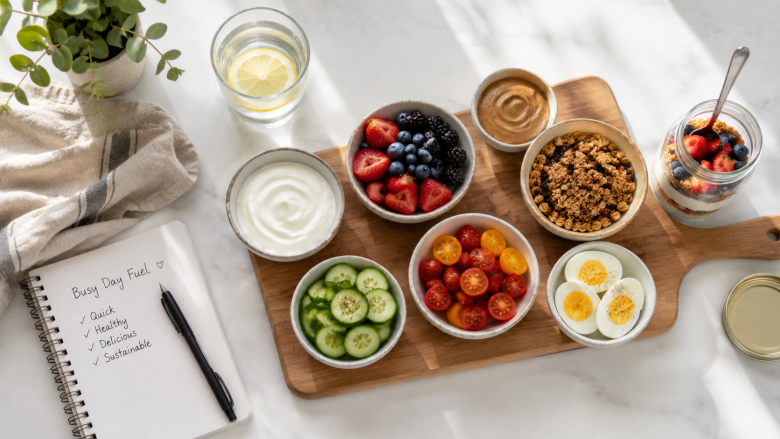
- If I have a fridge, I'll also portion out Greek yogurt with berries.
The whole thing takes less than 10 minutes because I'm not cooking anything complicated. And I know exactly what I'm grabbing each morning - no decision fatigue.
One mistake I made early on was prepping too much. I'd make 10 snacks, and by Friday they were stale or I was tired of them. Now I prep only 5, and I rotate the menu each week. It keeps things interesting.
If you have more time on weekends, you can also make a big batch of energy balls (oats, peanut butter, honey, and chia) and freeze them. But for a quick prep, the method above works great.
The Budget-Friendly Snack Strategy
Eating healthy at work doesn't have to be expensive. The desk drawer kit I described costs about $20 for a week's worth of snacks. Compare that to buying a $3 snack every day from the vending machine - that's $15 a week, and you're getting junk.
Here are my top budget tips:
- Buy nuts and seeds in bulk from the bulk bin - they're cheaper than pre-portioned packs.
- Use canned fish (tuna or salmon) - it's affordable and shelf-stable.
- Buy fruit that's in season - apples and pears last all week in a desk drawer.
- Make your own instant oatmeal mix instead of buying single-serve packets.
- Roast a big batch of chickpeas on Sunday - they cost pennies and taste great.
You don't need to buy fancy "snack packs" or "protein bites." The simplest foods are often the cheapest and the healthiest.
Putting It All Together: Your Next Step
You now have the formula, the desk drawer kit, and a batch prep routine. The only thing left is to start. I recommend you pick a day this week to stock your desk drawer with the basics. Then, on Sunday, spend 10 minutes prepping your snacks for the week.
When you feel that 3 PM hunger coming, instead of reaching for a granola bar, try one of these combos:
- Apple + string cheese + a few almonds
- Crackers + canned tuna + olive oil
- Rice cake + peanut butter + dark chocolate
- Instant oatmeal + chia seeds + peanut butter
You'll notice the difference immediately - no more energy dip, no more brain fog, and no more raiding the office candy bowl.
If you ever need more ideas, remember the formula: one carb, one protein, one fat. That's it. And if you want to pair your snacks with some movement to boost your energy even more, check out our guide on quick desk stretches for energy - a two-minute stretch can do wonders.
The best snack is the one you'll actually eat. So make it easy, make it balanced, and make it work for your schedule. Your body - and your 4 PM productivity - will thank you.